Saddest day in my life was when Chinese police arrested my visiting …
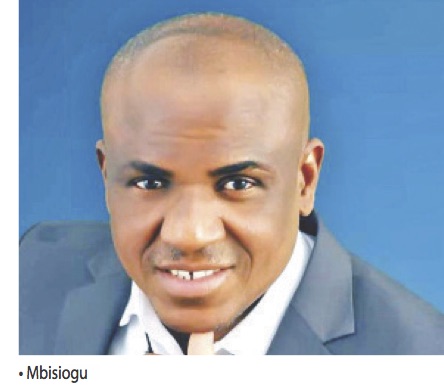
By Chukwudi Nweje
Chairman/Chief Executive Officer, Blue Diamond Logistics Limited and Shanghai Engineering Works and Industrial Limited, Mr Festus Uzoma Mbisiogu, has sensationally told a story about his unpalatable experience in China.
According to him, his visiting wife was arrested by the Chinese police because the authorities felt a black man should not live in an exclusive neighbourhood he lived.
Mbisiogu said that he was given an ultimatum to pack out of the estate before his wife could regain her freedom. Of course, he had no choice than to comply.
This budding businessman, who turned 50 yesterday, in this interview, told the story of his life. He talked about growing up, business apprenticeship, his businesses, charity work and others.
Your 50th birthday is on April 15. How does it feel to attain this landmark in a country where life expectancy is dropping daily?
I am super excited to turn 50 years because looking back at what I have passed through in life, I didn’t know I would be alive today. Sometime in 2006, I was very sick and was admitted in the Lagos State University Teaching Hospital. I was in the Emergency Room, and all kinds of culture tests were done on me, but the doctors couldn’t diagnose what was wrong. I thought it was the end for me, that the Lord has decided to take me. Luckily, the Lord spared my life and I am thankful for that. I had friends who suffered ailments that were not as serious as mine, but they are no longer with us. When I remember these friends and knowing that they are no longer with us, I count myself lucky, blessed by God and I thank Him.
Could you share with us some memorable blessings you have received in the last 50 years?
Turning 50 years is a golden jubilee and I appreciate God for that. I am from a poor family, perhaps the poorest family in Umuchima in Ideato South Local Government Area of Imo State. We had four rooms in my family house; my mother borrowed money from the group she belonged and fixed two rooms. She and my father used one room, while four of us the children shared the other room. In 1998, a man called Sunday, who lived on Abeokuta Street, Ebute Metta, took me from the village to Lagos and handed me over to one Josiah from Amichi, now late. I was his apprentice. I served him for seven years faithfully to the glory of God. We were into trading. We had our shop at Tejuosho Market in Yaba. When I came to Lagos, I told myself that to succeed I must have stringent principles as guide. One of the things I did was to join the Catholic Charismatic Renewal Society at Saint Dominic Catholic Church, Yaba. I became close to God and that shaped my life. I shunned going to clubs or drinking. My routine was to go to the shop, and when I came back in the night, I carried the dustbin from our house at 92 Ojuelegba Road to dispose at Lagoon, which was the practice then. I also mopped the three-bedroom house where we lived every day. My Master settled me in 1994, and gave me N50,000 to start my own business. He slaughtered a cow and made a feast to celebrate my freedom and called all the elders and they prayed for me.
What are some of the challenges you faced after your freedom?
After my freedom, people who noticed how I served my Master identified with me and some of them gave me goods on credit and some gave me loans. At a point, I had problems with my business and decided to travel to Dubai to look for greener pasture. The people I went through duped me. For a fee of $100, they charged me $1,000. They gave me fake visa and at the point of entry into Dubai I was stopped and deported. I came back and struggled again to return to Dubai. I met one Alhaji, who again gave me fake documents. I was stopped point of entry into Dubai and deported. All the money I made from my business vanished in the twinkle of an eye, but I did not give up. In 1996, I made a third attempt to enter Dubai and succeeded. I discovered that many Nigerians go to Dubai for business. I met a man called Charles, who I wanted to partner with, but he told me he already has a lot of Nigerian partners. I was in Dubai for two weeks and deported again, for the third time. My parents called me back to Ogwashiukwu, Delta State where they stayed. They harvested yams from their farm for me to sell and raise money. I realised N30,000 from selling the yams and they gave it to me and told me to go back to Lagos. As God will have it, I found favour as some people agreed to pool money with me, so that to travel back to Dubai for business. We did this, but the partnership later broke when one of them decided he would travel to Dubai too and some of the partners started withdrawing their investments.
So, what happened next?
God works in mysterious ways because as this partnership was falling apart on my last trip to Dubai, I met one Azeez and he said he wanted to do business with me. I told him I didn’t have the money, but he decided to give me credit facility of $2,000 and we agreed that I will pay back within three months. Luckily, I was able to pay him back in one month and half. He gave me a second credit of $5, 000 and I paid back as agreed. Over time, he increased the credit facility to $40,000. From Dubai, I started traveling to China for business.
Apprenticeship among the Igbo is acknowledged worldwide for its role in grooming entrepreneurs, but we have also heard about Masters who raise allegations against their apprentices to avoid settling them. There are also apprentices who steal from their Masters. What was your experience?
Related News
Six of us were apprentices at the same time, but I was the only one that our Master settled and celebrated because I tried my best to do the best. I declined from stealing my Master’s money. In fact, this caused enmity between me and the other apprentices who wrote a letter to me and threatened me that because I refused to join them, that I will face financial difficulties. My money started missing after I got that letter. I will keep money and it will disappear without trace. My Master’s wife had to call Rev Emma Ukpai for deliverance prayers. On my own, I was also saying my prayers at Saint Domonic and fasting and within a short time it stopped. Some of our Igbo brothers don’t want to go through the learning process. They prefer quick money. Some Masters may also not want to settle their apprentice, so they look for excuses. Unfortunately, the trend of apprenticeship has reduced among the Igbo because of these negative things.
From the humble beginning you painted, you rose to become a friend of presidents, governors, and ministers. How did that happen?
I made a deliberate decision that I will befriend those bigger than me and focused because those you associate with determine where you will reach in life. I became friends with President Goodluck Jonathan, Peter Obi, and Ngozi Okonjo-Iweala because whenever they were on business trips, I would go and lodge in the hotel they were staying. From knowing them, I also started organising Investment Forums. One of the Investment Forums had 24 governors in attendance.
How were you able to combine education and business?
I dropped out of secondary school; I did not finish, but I set targets and timeline for myself, and I followed them. All the targets I set for myself to achieve before age 40 have been realised, only one which I set for 45 to 50 years has not been realised. It has to do with government, but it is not becoming a governor, I am not a politician. I also realised that education might be an impediment to achieving the goals I set for myself, I attended Issele Asagba Secondary School in Delta State, but I did not finish, I was in my second year of secondary school when I was brought to Lagos. I went back to school because I realised the role of education, I got a degree in Business Administration from the University of Lagos (UNILAG). While studying in UNILAG, I was establishing my business in China because what I had in my target which I wrote down was that between 30 and 35 that I would have a business abroad. At one point while studying, my business was crumbling; so I wrote to the UNILAG authorities that I wanted to defer for one or two years to consolidate my business and they granted my request. I also obtained a Master’s degree from the Guangdong University of Foreign Studies in Guangzhou, China. I also went to Lagos Business School.
You were the coordinator of Nigerians in Diaspora Organisation (NIDO) in the Guangdong Province of China. What were your experiences?
Nigerians in China pass through a lot. You could not travel on residence visa with your family; they only started recently. I always questioned the Nigerian Government why it has an embassy in Beijing where less than 600 Nigerians live, have a Trade Mission in Shanghai that has about 400 to 500 Nigerians, but in Guangdong Province that has 10,000 Nigerians there was no consulate activities; that is why Nigerians are being humiliated. If you are in Guangdong Province and you have a problem, it will take you three hours by air and about 21 hours to get to Beijing. On his last visit in 2015 before he left office, Jonathan approved a consulate office in Guangdong Province. Nigerians in the province now have a place to go to when they have problems.
Why did you focus on China when some people believe the Chinese are not accommodating?
There are many business opportunities in China. One of them is the Canton Fair held in China twice a year, from 15 to 30 April and 15 to 30 October. Captains of industry and high level government officials attend this fair. It is one of the biggest in the world. Eighty to 90 per cent of what Africa consumes is from China. When I relocated to China, I told the Nigerian Government that we can do better if we had steady power supply. Nigerian officials that attended one of the fairs refused to go to the heavy equipment section on the argument that Nigeria did not have the power supply for the machinery. As I said earlier, there are opportunities in China because they have a conducive environment. If you want to buy anything from China now, they will ask you whether you want American, European or Nigerian standard. My stay in China has helped me succeed in my business, I am not just there to make profit, but to extract the good things.
What is the story behind your philanthropic gesture?
Growing up, my parents were into farming. Whenever we travelled to the village during festive season they used this 911 lorry to convey food stuff in large quantities home. I copied that from my mother. I had one experience when I visited a priest at Umuchima once. As the priest was seeing me off, some women were raining abuses on him. I asked the priest what the problem was and he told me that he shared rice to women in the village and that those were women the rice didn’t get to. This moved me to action. Since then, in 2009, I have been sharing rice to widows. It is a covenant I have with God. My interest in establishing a hospital came about because of what my mother told me about her experience. My immediate younger sibling died in her arms at a very tender age while she was trying to locate a health centre. I promised myself that I would do something in that regard if my village still had no health centre at my adulthood. Some people wanted to play politics with it and chased the workers away, but the women resisted it, I built and equipped the hospital and handed it over to the women. I provided water because the people in the village walked several kilometres to fetch water. My philanthropic activities are like a script written for me by God.
Could you share with us your most painful experiences so far in life?
The most painful experience in 50 years was when I lost my mother. I cried for several weeks. My mother had insisted that I must have a house in the village, and it was when I started building the house that she fell ill. I sent her to various hospitals in India, trying to save her, but God knows the best. I believe that nothing can happen without the knowledge of God. My second most painful moment was when my wife visited me for the first time in China. She got to my house around 5:00 p.m and as she was preparing egusi soup, the police came and arrested her. I was in the office. When I was alerted that the police had arrested her, I rushed down to the police station with some of my Chinese staff. The Chinese police told me that my wife’s crime was that I, a black man, was living in an exclusive estate where I lived, where only Chinese should live. They locked my wife up and said she would only be released if I packed out of the estate, insisting that no black would be allowed to live there. Perhaps, they didn’t notice me earlier because I am fair in complexion, but the presence of wife, whose complexion is not like mine, alerted them. There was no Nigerian consulate in the province. So, I was on my own. The Chinese police insisted I must leave that house before they would release my wife. I had to leave my house immediately before my wife was released. It was most painful.